
What to actually do
“This is a compound-interest pillar: small consistent actions over months beat dramatic short resets.”
What to actually do
This section translates the science into practical tiers — Start here if this pillar is new to you, Build on it once the basics are consistent, and Optimise for members who want to push further. The biggest single improvement for most members will come from the first tier. Forever Well membership is designed to make each tier meaningfully easier to sustain, through daily deliveries, targeted supplements, tests, and tracking built around the same evidence base this pillar sets out.
TIER 1 Start here
If gut health is a new focus for you, three actions will deliver most of the available benefit. They are what the evidence most consistently supports.
1. Build a plant-forward baseline with daily diversity
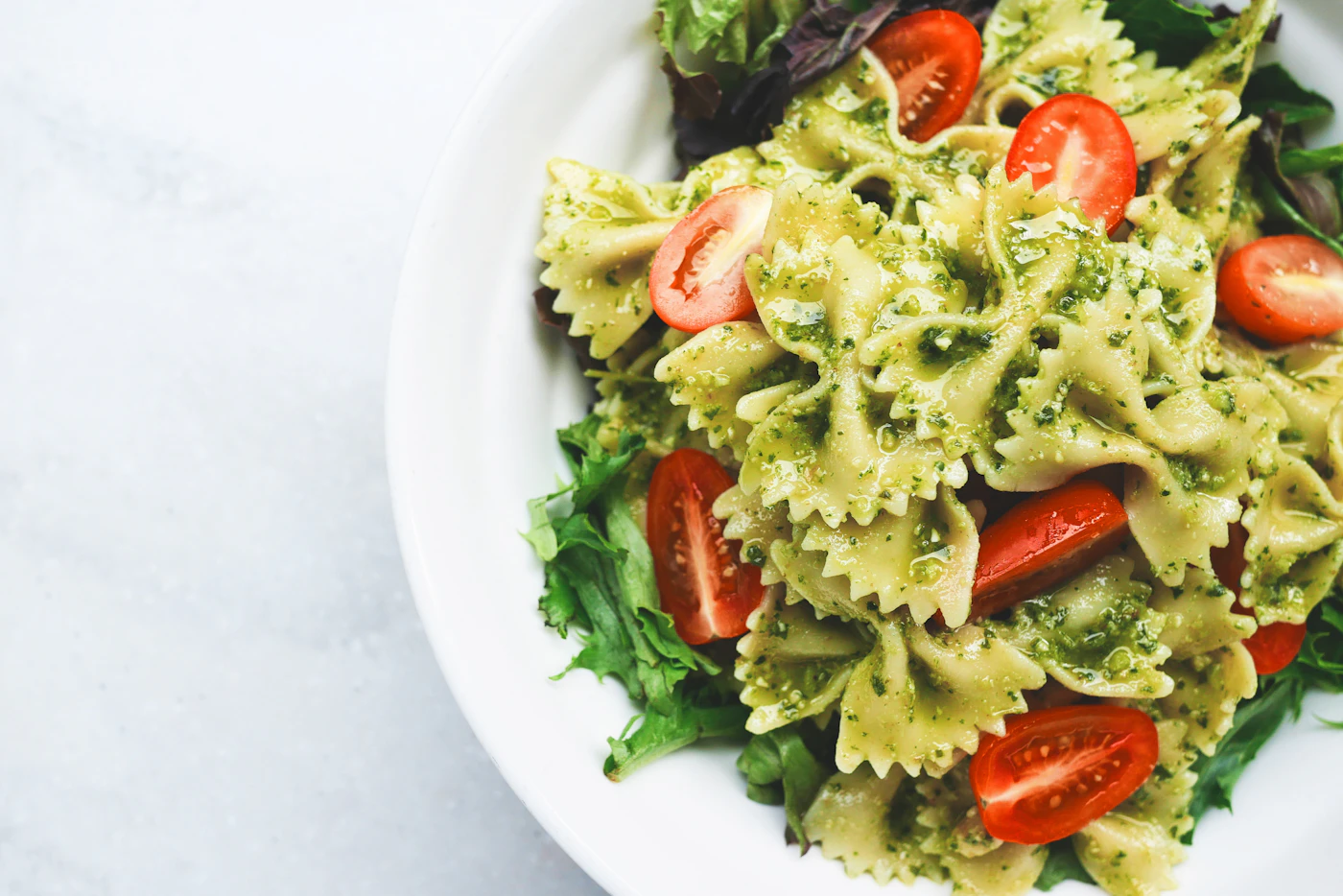
The single highest-leverage thing you can do for your gut is eat a wider variety of plants, more often, in larger quantities than you probably currently are. The gut microbes that matter for health eat fibre and plant compounds — and different microbes specialise in different fibres. A narrow plant diet feeds a narrow slice of the microbiome. A diverse plant diet feeds the range.
The useful framing is daily diversity rather than weekly volume. Aim for five to seven different plant foods each day across breakfast, lunch, and any snacks. A bowl of porridge with berries and nuts already gets you to three before you have left the kitchen in the morning. A salad with mixed leaves, tomatoes, cucumber, peppers, and chickpeas is five in one meal. The operational target is that every meal should pull in more than one plant food, and across the day they should add up. Forever Well members get a daily plant blend delivering over forty different plants, herbs, seeds, and polyphenol-rich ingredients in a single 25g serving, which takes the diversity target off the to-do list for most days.
The weekly target most people have heard of is thirty different plant foods a week. It is a useful rough measure — the American Gut Project found that people hitting thirty showed meaningfully higher microbial diversity than those hitting ten. Plants count broadly: vegetables, fruits, legumes, nuts, seeds, whole grains, herbs, and spices. A teaspoon of cumin in a stew counts. A tablespoon of mixed seeds on your yoghurt counts. This is not a prescription to go vegetarian — it is a prescription to crowd the plate with plants alongside whatever else you eat.
2. Add a daily fermented food
The Stanford trial cited in section 2 showed that a ten-week diet rich in fermented foods increased microbial diversity and reduced multiple inflammatory markers, where a high-fibre diet alone over the same timeframe did not. Fermented foods are one of the fastest-acting dietary levers on the gut.
Practical target: one portion of a live-culture fermented food most days. Live-culture yoghurt, kefir, kimchi, sauerkraut, miso, tempeh, and kombucha all work. All are stocked by UK supermarkets. Plain kefir on porridge at breakfast is probably the single easiest version to build into a daily routine. Two tablespoons of sauerkraut or kimchi alongside a savoury meal is another. The serving size matters less than the consistency — regular small amounts beat occasional large ones.
One technical note: the 'live cultures' wording matters. Pasteurised kimchi and sauerkraut, for example, do not contain the live microbes that do the work. Look for products in the chilled section, not the tinned or jarred shelf-stable versions. When in doubt, the label will say 'live' or 'unpasteurised'.
3. Reduce ultra-processed foods
The evidence that ultra-processed foods damage the gut is robust and growing. Emulsifiers, artificial sweeteners, and industrial additives used to extend shelf life and improve texture appear to disrupt the gut barrier and reduce microbial diversity. The consistency of findings across observational studies is strong.
Practical target: aim to get the majority of your calories from minimally-processed foods that you could recognise on the plant, animal, or raw ingredient they came from. Cooking from scratch is not required every day, but ultra-processed foods — ready meals, most breakfast cereals, packaged snacks, processed meats, sugary drinks — should be occasional rather than routine. A useful rule of thumb: if the ingredient list has more than five items you do not recognise as food, it is probably ultra-processed.
Reducing ultra-processed food does more for the gut than adding any single supplement will. It is also one of the few interventions that has knock-on benefits across most other pillars — nutrition, metabolic health, cardiovascular risk, weight management, energy levels.
TIER 2 Build on it
Once the basics are consistent, three refinements make the rest of the evidence base work harder for you.
4. Widen your plant variety and include polyphenol-rich foods
The Start here tier asks for a plant-forward baseline with daily diversity. This tier asks you to pay active attention to widening that diversity — both across the day and across the week — and to include specific categories of plant foods that deliver extra benefit.
The first tactic is straightforward: shop differently. Buy whatever vegetables are in season and cheapest rather than defaulting to the same list every week. Make legumes a weekly habit — lentils, chickpeas, beans — and rotate through different varieties. Herbs and spices count and add variety without much effort. Try one new plant food a week. Over a year this is a materially different diet from most people's.
The second tactic is to prioritise polyphenol-rich foods within your plant diversity. Polyphenols are plant compounds — flavonoids, catechins, resveratrol, many others — that the gut microbiome metabolises into beneficial compounds. Deep-coloured plant foods are the best source: berries, dark leafy greens, red and purple vegetables, extra-virgin olive oil, nuts, dark chocolate, green tea, and coffee all feature prominently in the research. A handful of berries with breakfast. Olive oil as the default fat for dressing and cooking. A square or two of dark chocolate (70 per cent or higher). Green tea or coffee in moderate amounts. These are not austere additions — they are foods many people already enjoy. The framing is to move them from occasional to routine.
Coffee in particular has surprisingly strong evidence for positive effects on the gut microbiome in moderate amounts — typically two to four cups a day. It is one of the few widely-consumed substances with a robust evidence base both for and from the gut.
5. Step up to three fermented foods a day
Tier 1 asked for one daily serving of a live-culture fermented food. The Stanford study that underpins this recommendation found that the effect scaled with dose — larger and more frequent servings produced stronger increases in microbial diversity and larger reductions in inflammatory markers. Three servings a day was close to the high end of what participants achieved in the trial, and it is a reasonable stretch target for members who have consolidated the basics and want to push further.
Practical implementation: spread the servings across meals rather than clustering them. Kefir with breakfast (serving one), miso soup or a small portion of kimchi with lunch (serving two), a spoonful of sauerkraut with dinner (serving three). This is easier than it sounds once the pattern is established, because the foods are varied and small portions count. A tablespoon of each is sufficient per serving.
Variety across fermented foods matters as much as quantity. Different fermented foods contain different microbial communities; rotating between them — kefir some days, yoghurt other days, kimchi alongside savoury meals, kombucha as a soft-drink replacement, miso in soups and dressings — contributes more than any single food done repeatedly. As with plant diversity, the microbiome responds to range.
One practical constraint: three fermented foods a day is a meaningful quantity and may not suit everyone initially. Members with sensitive digestion sometimes find that building up gradually — from one, to two, to three over a period of weeks — avoids short-term bloating or discomfort. If a particular fermented food consistently causes symptoms, rotate to a different one rather than forcing the issue.
6. Attend to the pillars that touch gut health
The gut does not operate in isolation. Sleep, exercise, and stress all influence the microbiome independently of diet. Chronic sleep disruption shifts the gut microbiome towards less favourable patterns. Regular physical activity — both aerobic and resistance training — supports microbial diversity. Chronic psychological stress affects the gut through the gut-brain axis and contributes to barrier dysfunction.
Practical implication: if you are working on the gut pillar, the other pillars start doing some of the work for you. A member with consistent sleep, regular exercise, and managed stress will get more out of dietary changes than a member who gets the diet right but neglects the rest. Section 5 maps these overlaps in detail.
TIER 3 Optimise
This tier is for members who already have the first two tiers in place and want to push further. The recommendations here are about specific situations, sustained consistency, and the kind of measurement that lets you verify what is working.
7. Be deliberate during recovery windows
There are specific periods when the gut microbiome is disrupted and benefits from extra attention. Courses of antibiotics are the clearest example: they disturb the microbiome substantially, and recovery can take weeks to months. Severe illness, hospitalisations, and extended international travel can have similar effects. Periods of unusually high stress or disrupted routine count too.
Practical response during these windows: prioritise fermented foods more consciously than usual, prioritise fibre diversity, keep ultra-processed foods particularly low, and aim for more sleep than usual. If antibiotics are needed (and they are sometimes unavoidable), taking them is the right call; the gut can be supported through the recovery afterwards. Targeted probiotic supplementation has reasonably good evidence for reducing antibiotic-associated gut symptoms and supporting recovery, which is why Forever Well's daily supplement stack includes a dedicated gut formulation at the Gold level.
8. Pay attention to timing and rest
The gut benefits from periods without food as well as from what is eaten during periods of eating. Most members who eat continuously from 7am to 11pm, including snacks and late-night eating, are giving their gut no rest. A simple twelve-hour overnight eating break — finishing the evening meal by 8pm, not eating again until 8am — is enough to allow meaningful digestive rest and appears to support microbiome rhythm.
This is not a weight-loss intervention or an extreme fasting protocol. A twelve-hour overnight gap is what most people had as a default eating pattern until recent decades. Reclaiming it is low-cost and largely invisible in terms of dietary changes. It pairs well with the sleep pillar.
Meal regularity also matters. The microbiome responds to circadian rhythms, and erratic eating patterns — large meal at midnight, skipped breakfast, inconsistent day-to-day timing — appear to disrupt microbial rhythms independently of what is eaten. Where possible, regular meal timing supports regular gut function.
9. Adjust for life stage
The gut microbiome changes across the life course, and so do the considerations that matter. For members in their forties and fifties, the work is largely preventative — building the habits that will compound over the following decades. For members approaching or in the menopause, hormonal shifts affect the gut in ways that are still being researched but appear real; this is a period where consistency and plant diversity matter particularly. For members in their sixties and beyond, frailty prevention becomes a specific focus, and the NU-AGE evidence on Mediterranean diet shows that dietary change continues to produce measurable benefits even in older age.
For members who have had significant gut-related health issues — inflammatory bowel disease, irritable bowel syndrome, coeliac disease, significant food intolerances — the general recommendations in this pillar still apply, but specific conditions warrant specific clinical input. This pillar is not a substitute for gastroenterological care. If you have a diagnosed gut condition, the practical tiers above should be read alongside whatever your specialist has advised.
10. Test and track
Forever Well's Gold-tier membership includes a gut microbiome test as part of the month five programme, alongside blood biomarker panels that include short-chain fatty acid readings, inflammation markers, and other indicators relevant to gut health. For members who want objective measurement of their progress — and for members who respond well to concrete data as a motivator — this is where the pillar's evidence base meets individual biology.
A microbiome test earns its place as a baseline-and-tracking tool. A single test tells you where you are starting. Repeating it after consistent dietary changes tells you whether those changes have moved your microbiome in the intended direction. That before-and-after comparison is the most useful thing these tests offer, and it is a genuinely useful thing — concrete data is a powerful motivator for sustained change.
A note on how to read the results: there is no agreed scientific definition of what a healthy gut microbiome should look like (the 2024 international consensus paper cited in section 2 is explicit on this). Absolute readings at a single point in time are noisy — microbiome composition shifts with recent meals, stress, illness, and medication. The genuinely useful signal is the direction of change over time. Forever Well's guidance focuses on that delta rather than on absolute interpretation, which is where member-level testing actually has something to say.
A note on expectations
Most members who do the first tier consistently for twelve months will notice tangible changes — better digestion, steadier energy, fewer minor illnesses, often improved mood and sleep. Most members who add the second tier will consolidate those gains. Most members who reach the third tier will be supporting long-term gut health in a way that compounds across decades. This is a compound-interest pillar, not a dramatic-returns one.
This pillar rewards patience. The biggest single improvement for most members will come from the first tier. Forever Well's role is to make each tier meaningfully easier to sustain — through daily deliveries, supplements, tests, and tracking built around the evidence base this pillar lays out.